
What are the
common features
of lipodystrophy?
In view of its rarity and the varied impact on patients, patients may be misdiagnosed or diagnosed late, in some cases years after the onset of first signs. Patients often suffer from severe health consequences such as metabolic problems that can impair quality of life enormously.
Lipodystrophy can be genetic or acquired. The appearance of patients can vary greatly according to the generalised and partial subtype. (keep hyperlinks for generalised and partial subtype)
What are the visible signs of lipodystrophy?
There are various external signs that may indicate generalised and partial lipodystrophy.
The essential sign is the lack of subcutaneous fat in the body.
The following symptomsare common in patients suffering from lipodystrophy:

Near total or partial lack of
subcutaneous fat
Lipodystrophies are
characterised by a lack of
subcutaneous fat. The extent
and location of fat loss
depends on the subtype of
lipodystrophy.

Prominent visible veins
The lack of subcutaneous fat
leads to the veins appearing
enlarged and protruding
visibly. This is particularly
noticeable on the arms and/or
legs.

Muscular appearance
The lack of subcutaneous fat
and enlargement in muscles
may lead to a muscular
appearance.

Fatty and enlarged liver
The abdomen may look
enlarged; the navel may
protrude. This is mostly
caused by ectopic fat deposits
in the internal organs such as
the liver. The liver may
increase in size due to the
deposited fat. An enlarged
liver is called hepatomegaly.
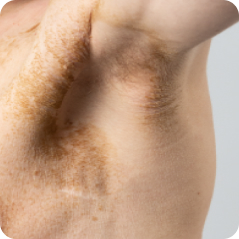
Dark, brown velvet-like patches
on the skin
In the area of the neck, the
armpits, under the breast and
in the groin, large, dark
patches can appear on the
skin. This is called “acanthosis
nigricans”. These patches
often appear in connection
with high insulin levels.
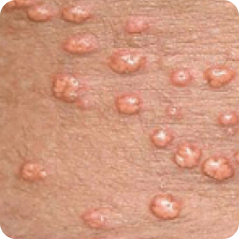
Papules or bumps that can
occur on your skin
The abdomen may look
enlarged; the navel may
protrude. This is mostly
caused by ectopic fat deposits
in the internal organs such as
the liver. The liver may
increase in size due to the
deposited fat. An enlarged
liver is called hepatomegaly.
What are the invisible signs of lipodystrophy?
Metabolic Changes
The lack of subcutaneous fat can lead to low leptin levels and this can have effects on very many processes
in the body. Pronounced metabolic disorders can occur and cause significant damage to the body. The
extent of these metabolic consequences may depend on the type of lipodystrophy and how seriously the
person is affected.
Some of the signs of partial or generalised lipodystrophy may be hard to recognise. Depending upon the
severity of disease and extent of body fat loss, patients may be predisposed to several metabolic changes.
Insulin resistant diabetes
Adipose tissue dysfunction, along with leptin deficiency, leads to the development of insulin resistance. This can lead to diabetes (diabetes mellitus). This can, in turn, lead to serious secondary diseases that can affect the kidneys, heart and eyes. A typical indicator of lipodystrophy is when diabetes is difficult to manage, or very high doses of insulin are required.
Fatty liver
Lipodystrophy can also cause an abnormal buildup of fats in the liver (hepatic steatosis), which can result in an enlarged liver (hepatomegaly) and abnormal liver function. This socalled non-alcoholic fatty liver disease (NAFLD) can eventually lead to liver fibrosis and cirrhosis as the disease progresses.
Accelerated longitudinal growth (partly visible sign)
Children with congenital GL grow faster than other children. Their height increases at a greater rate compared to their overall weight. This is known as “accelerated longitudinal growth”.
High triglycerides
The body converts any calories not needed to use right away into triglycerides and stores them in fat cells. In lipodystrophy, the reduced subcutaneous fat means that higher triglyceride levels are found in the blood (hypertriglyceridaemia) because there aren‘t enough fat compartments to store them in. This can have serious consequences including an increased risk of heart disease
Problems with puberty initiation in children, menstrualirregularities, and hirsutism in females
Leptin is an essential hormone that regulates the reproductive system in human. Leptin deficiency in lipodystrophy can lead to problems with puberty progression. Also, severe insulin resistance can cause polycystic ovaries, menstrual irregularities and hirsutism in females.